
Moving overseas? Shipping a vehicle between countries involves customs, import eligibility and stricter dangerous goods rules. See Moving Your Vehicle: International Shipping.
This page explains your options, how to choose a provider, and how to prepare your vehicle. Specific rules vary by country and region, so always follow the instructions of the company that will carry your vehicle.
Your transport options
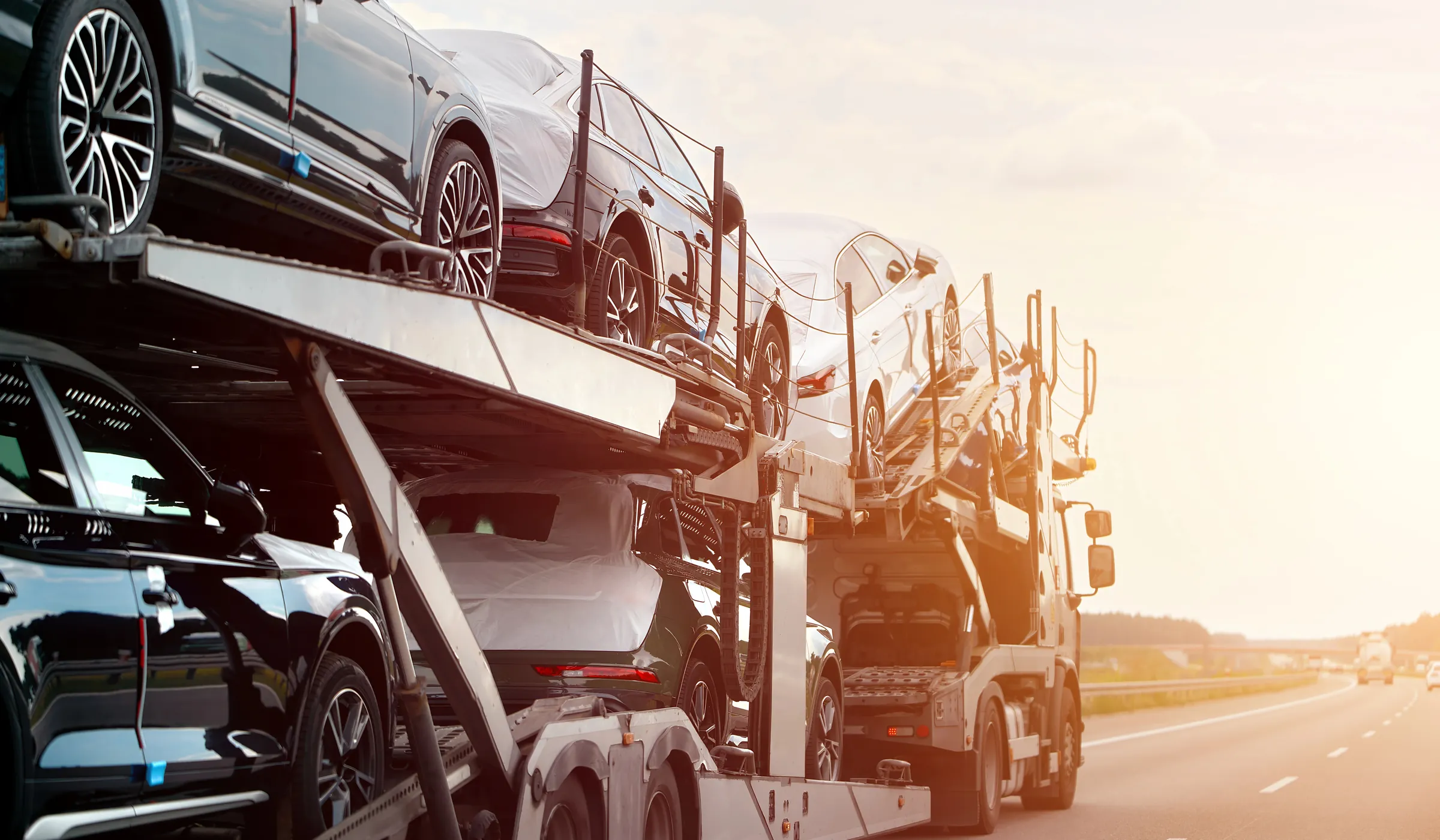
Open carrier
Your vehicle travels on an open, multi-level trailer with other vehicles. This is the most common and usually the least expensive option. Vehicles are exposed to weather and road debris, which rarely causes damage but is worth considering for high-value vehicles.
Enclosed carrier
Your vehicle travels inside a covered trailer, protected from weather and debris. It costs more and is typically chosen for classic, luxury, collector and low-clearance vehicles, and for motorcycles.
With your household goods
Some movers can carry a vehicle in the same moving van as your household goods, or arrange its transport as part of your move. Ask whether the vehicle is covered by the same contract and protection as your household goods; often it is handled under separate terms.
Door-to-door or terminal service
Door-to-door service picks up and delivers as close to your addresses as a large truck can safely reach. Terminal service, where you drop off and collect your vehicle at a depot, may cost less but requires more of your time.
Rail
In some regions, vehicles can travel by rail, either as freight or on passenger services that carry cars alongside travelers.
Driveaway service
In some markets, a professional driver drives your vehicle to its destination. It adds mileage and wear, and you should confirm how insurance applies.
For motorcycles, ask whether the carrier uses dedicated motorcycle restraints, enclosed transport or crating. Motorcycles need different securing equipment from cars.
Choosing a provider
Broker or carrier?
Many companies that advertise vehicle transport are brokers. They arrange your shipment and then hire a carrier to move it. Brokers are legitimate in many markets, but you should know who will actually transport your vehicle, who is responsible if something goes wrong, and who you pay. Ask directly, and be cautious of any company that won’t give a clear answer.
Verify licensing and insurance. In many jurisdictions, vehicle transport companies and brokers must be registered with a transport authority and carry minimum insurance. Check the company’s registration with the relevant authority before you book. The Licensing & Compliance pages explain the requirements and verification tools where you live.
Get the terms in writing. Your quote and contract should state the price and what it includes, the pickup and delivery window, the type of transport, the deposit and payment terms, and what happens if pickup or delivery is delayed. For general advice on reading quotes and contracts, see Understanding Moving Estimates and Contracts.
Be wary of quotes far below the others. Unusually low prices can mean long waits while a broker looks for a carrier willing to take the job at that rate, or charges added later.
Understand the protection. Ask what the carrier’s cargo insurance covers, its limits and deductible, and how claims are made. Check whether your own auto insurance covers the vehicle while it is in a transporter’s care. For high-value vehicles, consider additional coverage. See Liability, Valuation & Transit Insurance.
Fuel, batteries and electric vehicles
Vehicles carry fuel and batteries, both of which are hazards on a loaded transport truck. Carriers set rules to keep that risk low, and these rules are not optional.
Fuel. Most car carriers ask for the tank to be no more than about a quarter full. That is enough to drive the vehicle on and off the trailer while reducing weight and fire risk. If your vehicle travels in a moving van with household goods, or is crated, the mover may require the tank to be close to empty. Never put fuel cans, spare fuel or other flammable items inside the vehicle.
Leaks. Vehicles leaking fuel, oil, coolant or other fluids may be refused, because leaks can damage vehicles loaded below them and create a fire risk. Fix leaks before pickup.
12-volt batteries. The battery should be securely mounted, with no damage or leaks. Your carrier may ask you to disconnect it for some types of transport, such as crated motorcycles or vehicles carried with household goods. Disconnect any aftermarket accessories that drain power, and turn off alarms or tell the driver how to disable them.
Electric and hybrid vehicles. Large lithium-ion batteries are safe in normal use, but a damaged battery can catch fire, and battery fires are very difficult to put out. Before booking an electric or plug-in hybrid vehicle:
- Tell the carrier it is an EV or hybrid. Not every carrier transports them, and some require specific equipment or trained drivers.
- Follow the carrier’s charge instructions. Most ask for a partial charge, enough to drive the vehicle on and off the trailer and keep its systems running, but not a full charge. Ask for the exact level.
- Disclose any damage or warning lights. Vehicles with battery damage, flood damage, a recall affecting the battery, or battery warning messages may be refused or require special handling.
- Explain any special procedures the driver needs, such as transport or tow mode, and leave the charging cable with the vehicle if the carrier allows it.
Motorcycles. Fuel tank and battery rules apply in the same way. For crated motorcycles, the carrier may require the tank to be drained and the battery disconnected.
Preparing your vehicle
Before pickup
- Wash the vehicle so existing damage is easy to see
- Photograph every side, the roof, wheels, interior and odometer, with dates
- Remove personal belongings and all loose items. Carriers are generally not licensed or insured to carry household goods inside vehicles, and items left inside are usually not covered
- Remove or deactivate toll tags and parking passes
- Fuel no more than a quarter tank, or as the carrier instructs
- Charge EVs to the level the carrier specifies
- Check tires, brakes and for leaks; tell the carrier if the vehicle doesn’t run
- Fold mirrors, retract antennas, and secure or remove spoilers, racks and loose parts
- Turn off alarms, and provide a full set of keys or key cards
At pickup and delivery
The inspection report is your evidence. At pickup, the driver should record the vehicle’s condition on an inspection report, often part of the bill of lading. Walk around the vehicle with the driver, make sure every existing mark is recorded accurately, and keep a signed copy.
Inspect again at delivery, before signing. Check the vehicle in good light, compare it with the pickup report and your photos, and note any new damage on the delivery report before you sign it. Photograph damage immediately. If delivery happens after dark or in the rain, note that on the report.
Report damage promptly. Notify the carrier in writing as soon as possible, and follow the claim procedure in your contract. Time limits apply. See Filing & Managing Claims Tips.